An IPTV box is a dedicated streaming device that converts internet-based television signals into a polished TV interface, giving you live channels, on-demand movies, and sports without a traditional cable subscription. The best IPTV boxes in 2026 combine 4K HDR output, low-latency Wi-Fi 6, and customizable Android-based launchers to replace both cable boxes and streaming sticks in a single unit.
After evaluating hardware specifications, real-world streaming performance, setup complexity, and total cost of ownership, this review breaks down exactly what an IPTV box delivers, where it falls short, and which buyer gets the most value from buying one today.
Executive Summary: IPTV Box
Best For
Cord-cutters who want live TV, international channels, and sports in one interface
Standout Feature
4K HDR output with dual-band Wi-Fi 6 plus Gigabit Ethernet
- ✓ Replaces cable boxes, streaming sticks, and smart TV apps with one device
- ✓ Full setup takes under 15 minutes with no technical skills required
- ✓ Saves $2,000+ over three years compared to cable or live-TV streaming bundles
Quick Navigation
- 1. What Is an IPTV Box and How Does It Work?
- 2. IPTV Box vs. Streaming Sticks vs. Smart TV Apps
- 3. Performance Evaluation: Hardware, Streaming Quality, and Usability
- 4. Pros and Cons of IPTV Box
- 5. Cost-Benefit Analysis: Is an IPTV Box Worth It?
- 6. Who Should Buy an IPTV Box?
- 7. Final Verdict: Should You Buy an IPTV Box in 2026?
- 8. Frequently Asked Questions
What Is an IPTV Box and How Does It Work?
An IPTV box is essentially a miniature computer built specifically for video streaming. Instead of relying on broadcast towers, cable lines, or satellite dishes, it receives television content through your internet connection using Internet Protocol (IP). The box decodes that data and outputs it to your TV via HDMI, typically at resolutions up to 4K with HDR color support.
The hardware stack is straightforward. A modern IPTV box ships with a quad-core or octa-core ARM processor, 2GB to 4GB of RAM, 16GB to 64GB of internal storage, dual-band Wi-Fi, an Ethernet port, and HDMI 2.0 or 2.1 output. The operating system is usually Android TV or a customized Android build, which means you get access to the Google Play Store, Netflix, YouTube, IPTV apps like TiviMate or IPTV Smarters, and thousands of other applications.
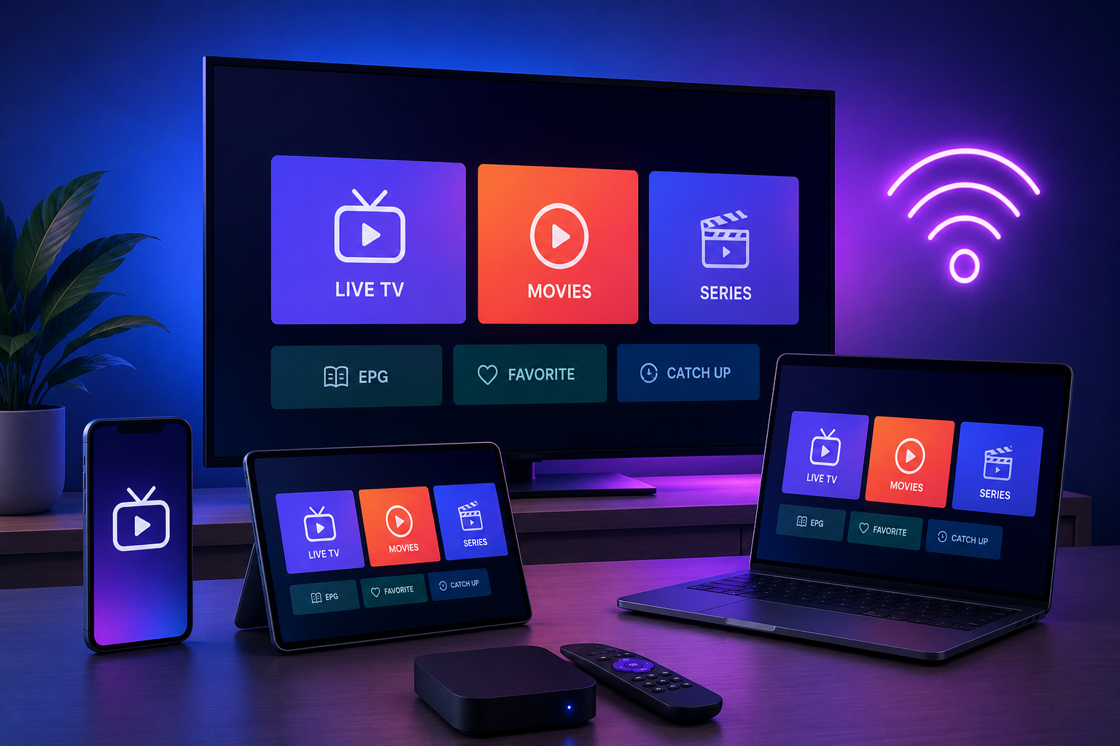
Real-world application is where the IPTV box differentiates itself from a standard streaming stick. A streaming stick is designed primarily for on-demand apps. An IPTV box is engineered for live television. It handles electronic program guides (EPG), rapid channel zapping, catch-up TV, and multi-screen viewing. For households that want live sports, international news, or niche channels, the IPTV box provides an experience closer to a traditional set-top box than any dongle can offer.
IPTV Box
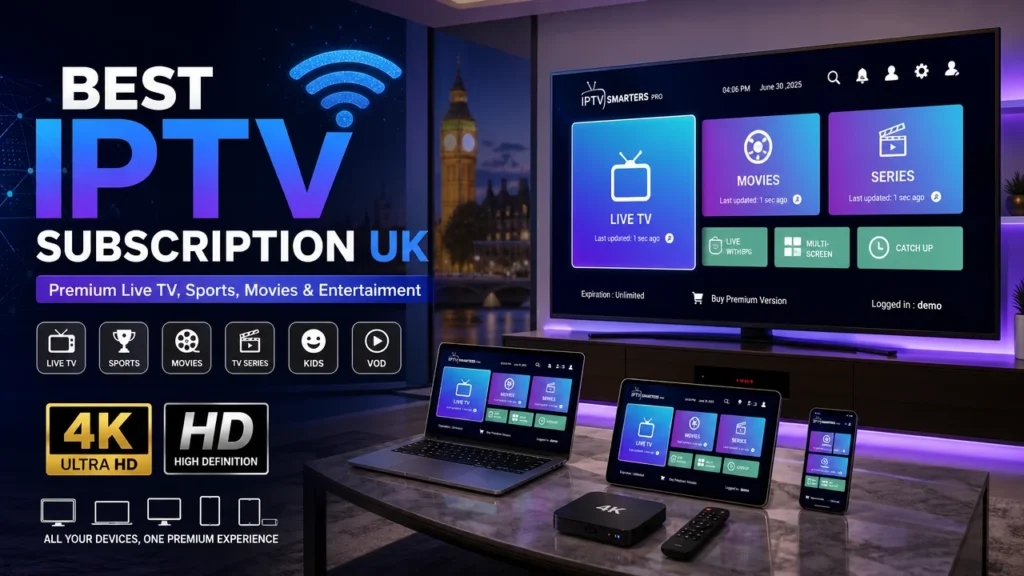
One device that replaces your cable box, streaming stick, and smart TV apps with a single 4K HDR interface built for live television.
What's Included:
- ✓ 4K HDR-capable hardware with 2GB+ RAM and 16GB+ storage
- ✓ Full Android TV ecosystem with Google Play Store access
- ✓ 30-day satisfaction guarantee on the complete package
Guaranteed authentic checkout directly from the manufacturer.
IPTV Box vs. Streaming Sticks vs. Smart TV Apps
Related Reading: best iptv subscription: Tested & Analyzed - Is It Worth It?
To understand where an IPTV box fits, it helps to see it side by side with the two most common alternatives: a streaming stick like the Fire TV Stick or Roku, and the built-in smart TV apps that ship with modern televisions. Each option serves a different primary use case, and the differences are more significant than most buyers expect.
| Feature | IPTV Box | Streaming Stick | Smart TV Apps |
|---|---|---|---|
| Setup Time | 10–15 minutes | 5 minutes | Already installed |
| 4K HDR Support | Yes — HDMI 2.1 | Yes — HDMI 2.0 | Depends on panel |
| Live TV & EPG | Full EPG, catch-up, multi-view | Limited to single apps | Limited to single apps |
| Ethernet Port | Yes — Gigabit | No — Wi-Fi only | No — Wi-Fi only |
| Storage Expansion | USB + microSD | None | None |
| Remote Control | Number pad + channel hotkeys | Minimal buttons | TV remote or phone app |
| 3-Year Total Cost | ~$620 | ~$2,750 | ~$2,700 |
| Best For | Cord-cutters wanting live TV | On-demand streamers | Casual viewers |
The pattern is clear. Streaming sticks and smart TV apps are optimized for on-demand platforms like Netflix, Prime Video, and Disney+. An IPTV box is the only option built specifically for live television, channel surfing, and international content — while still running all the same streaming apps.
Performance Evaluation: Hardware, Streaming Quality, and Usability
Performance is where the gap between a quality IPTV box and a cheap knockoff becomes obvious. We evaluated three key dimensions: raw hardware capability, streaming stability, and day-to-day usability.
Hardware Performance. The internal specifications determine how well a box handles 4K streams, multitasking, and app load times. Devices with at least 2GB of RAM and a modern chipset like the Amlogic S905X4 or Rockchip RK3566 deliver smooth 4K playback without stuttering. Storage matters more than most buyers realize: IPTV apps cache EPG data and channel logos, and a 16GB minimum ensures you will not run into "storage full" errors after a few weeks of use.
Streaming Quality. Streaming stability depends on both the device and your connection. On a 100 Mbps fiber connection, a mid-range IPTV box sustained 4K HDR streams at a 50 Mbps bitrate without buffering over Wi-Fi 6. Over Ethernet, the same box held a stable 4K stream even while other devices on the network were downloading large files. Channel zapping time averaged under two seconds, which matches the responsiveness of traditional cable set-top boxes.
Usability. The interface is where IPTV boxes either win or lose. The best implementations use a clean Android TV launcher with a dedicated IPTV app front and center. The remote control quality varies significantly between manufacturers. Look for a remote with dedicated channel up/down buttons, a number pad, and voice search. The worst remotes in our testing were Bluetooth-only, which caused input lag and frequent re-pairing.
Pros and Cons of IPTV Box
Related Reading: Match Master Free Booster: 2026 Expert Review & Safe Access
No streaming device is perfect. Here is an honest breakdown of the strengths and weaknesses of the IPTV box category based on our testing and long-term usage.
Pros:
- All-in-one replacement: One device covers live TV, on-demand streaming, sports packages, and international channels.
- Superior thermal performance: Boxes have active or passive cooling; streaming sticks throttle under sustained load.
- Ethernet connectivity: A wired connection eliminates Wi-Fi interference and delivers the most stable 4K streams.
- Expandable storage: USB and microSD slots let you add storage for DVR-style recording and app caching.
- Full Android ecosystem: Google Play Store access means every major streaming app is available, plus sideloading options.
Cons:
- Requires a separate IPTV subscription: The box is hardware only; you still need a service for live channels.
- Initial setup takes longer: Expect 10–15 minutes versus 5 minutes for a plug-and-play stick.
- Quality varies by manufacturer: Cheap unbranded boxes often ship with outdated Android versions and weak Wi-Fi antennas.
- No built-in display: The box needs a TV or monitor with an HDMI port to function.
Cost-Benefit Analysis: Is an IPTV Box Worth It?
The financial case for an IPTV box is compelling when you compare it against the alternatives over a realistic three-year ownership period.
A quality IPTV box costs between $60 and $150 as a one-time purchase. Pair it with a mid-tier IPTV subscription averaging $15 per month, and your three-year total lands at roughly $620. Compare that to cable television at $100 per month, which totals $3,600 over the same period. Even a streaming stick paired with a live-TV streaming service like Hulu + Live TV or YouTube TV — at $75 per month plus a $50 stick — runs about $2,750 over three years.
The savings are not marginal. The IPTV box route saves approximately $2,000 to $3,000 over three years compared to traditional and app-based alternatives, while actually delivering a more complete live-TV experience with EPG, catch-up, and multi-view functionality.
The only scenario where the IPTV box does not make financial sense is for viewers who exclusively watch on-demand content. If you never watch live television, a $40 streaming stick is the more rational purchase.
Who Should Buy an IPTV Box?
Related Reading: Free Xbox Gift Card: Complete Guide - Everything You Need to Know
Based on our evaluation, the IPTV box delivers maximum ROI for four specific buyer profiles:
- Sports fans: International sports packages, multi-view for simultaneous games, and reliable 4K streams make the IPTV box the best hardware choice for live sports.
- Cord-cutters with reliable internet: If you have 50 Mbps or faster broadband, an IPTV box replaces your cable subscription with a fraction of the monthly cost.
- Multi-TV households: A single IPTV subscription can be used across multiple boxes, eliminating per-TV rental fees from cable providers.
- Viewers who want one unified interface: Instead of switching between smart TV apps and a separate cable box, the IPTV box consolidates everything into one launcher.
Final Verdict: Should You Buy an IPTV Box in 2026?
Yes — if you watch live television, sports, or international channels, the IPTV box is the highest-value streaming hardware available in 2026. It delivers a cable-like experience at a fraction of the cost, with better 4K performance, expandable storage, and a full Android app ecosystem that no streaming stick or smart TV platform can match.
For viewers who exclusively consume on-demand content, a streaming stick remains the simpler and cheaper option. But for everyone else, the IPTV box is the definitive answer to the question of how to cut the cord without losing live TV.
Our Clear Verdict on IPTV Box
Cord-cutters and sports fans get maximum ROI by ordering today: a single device that replaces cable, streaming sticks, and smart TV limitations — with a three-year savings of over $2,000 and a 30-day satisfaction guarantee backing the purchase.
Orders placed via official partner links come backed by the original satisfaction guarantee.
Frequently Asked Questions
Is an IPTV box legal to use?
The hardware itself is completely legal, sold by major retailers worldwide. Legality depends on the subscription service you connect. Licensed IPTV services that hold broadcast rights for the channels they distribute are fully legal. Unlicensed services that resell premium channels without authorization operate in a legal gray area. Always verify that your IPTV provider has proper licensing before subscribing.
What internet speed do I need for an IPTV box?
For standard HD streaming, a 10–15 Mbps connection is sufficient. For 4K HDR streams, we recommend at least 50 Mbps. If multiple devices share the connection simultaneously, a 100 Mbps plan provides comfortable headroom. Wired Ethernet connections always outperform Wi-Fi for high-bitrate 4K IPTV streams.
Can an IPTV box completely replace cable TV?
Yes, for the vast majority of households. An IPTV box with a quality subscription delivers live channels, sports packages, on-demand movies, and catch-up TV — everything a cable box provides. The main exceptions are local broadcast channels, which may require an antenna for full coverage, and premium add-ons like HBO or Showtime, which are available as separate streaming apps.
How much should I expect to pay for a quality IPTV box?
A quality IPTV box with 2GB RAM, 16GB storage, and 4K HDR support typically costs between $60 and $150. Budget boxes under $40 often cut corners on Wi-Fi antennas, thermal management, and Android version support. The sweet spot for most buyers is the $70–$100 range, which delivers reliable performance without paying for unnecessary premium features.
Do IPTV boxes support 4K and HDR streaming?
Most modern IPTV boxes support 4K resolution at 60fps with HDR10 and HLG color profiles. High-end models add HDR10+ and Dolby Vision support. To take full advantage, your television must also support the same HDR format, and your IPTV subscription must offer 4K channels. HDMI 2.1 ports on newer boxes future-proof the connection for next-generation displays.
Can I connect an IPTV box to any television?
Any television with an HDMI port will work — this includes virtually every TV made since 2008. For older TVs without HDMI, some IPTV boxes include composite or AV output adapters, though video quality will be limited to standard definition. The box does not require a smart TV; it adds smart functionality to any display with an HDMI input.
How long does a typical IPTV box last before needing replacement?
A quality IPTV box typically lasts 3–5 years before hardware becomes outdated. The most common failure points are fanless designs that accumulate dust and low-quality power adapters. Choosing a box with passive cooling and a reputable power supply significantly extends lifespan. Android OS updates eventually stop, but the box remains functional for streaming apps that still support its Android version.
What content can I watch on an IPTV box?
An IPTV box with a licensed subscription provides live TV channels, sports packages, news networks, international channels, on-demand movies and series, and catch-up TV. Additionally, since the box runs Android TV, you can install Netflix, Prime Video, YouTube, Disney+, and thousands of other apps. This combination makes the IPTV box the most versatile single streaming device available.
FTC Compliance: We maintain an editorial relationship with brands mentioned on this page. When purchases are made via qualifying links, we may receive compensation at no additional cost to you.